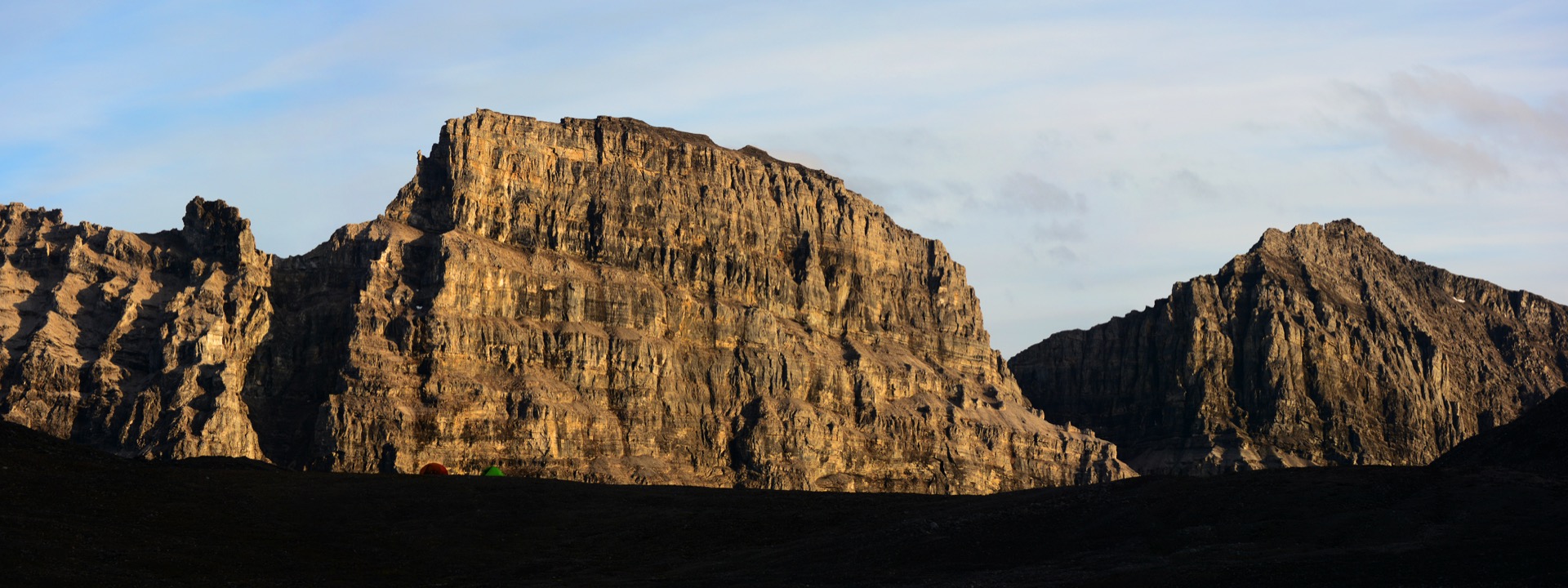
Summary
$0
Entrance fee
Historic Crowd Data
Avg. monthly visitors, 2015–2024 · National Park Service
Light
Moderate
Busy
Very Busy
Peak season is July–August, when around 63% of annual visitors arrive. For lighter crowds, aim for October–May.
Plan Your Visit
Extreme Remoteness & Safety"You're on your own"▾
Access & EntryNo fee · No roads▾
Main Air HubBettles
~20 mi south of the park boundary
The main air-taxi staging point, with an NPS ranger station and visitor center.
NPS Bettles info ↗
Dalton Highway AccessColdfoot
Arctic Interagency Visitor Center (staffed summer only)
Anaktuvuk Pass is a Nunamiut village NPS describes as located "inside the park's boundaries" — a good starting point for exploration.
NPS Coldfoot info ↗
Things to Do6 categories▾
Backcountry Hiking & Backpacking3 notes▾
No Established TrailsOff-trail only
Congress designated the park trail-less by design — only sparse game trails cross tussocks, boggy ground and frequent river crossings
Route-FindingSelf-guided
Topographic maps, compass and GPS are essential; confirm your route against your air-taxi operator's pickup/drop-off points beforehand
Pace & Group Size10 max/group
Experienced hikers consider six miles a good day's travel over this terrain; group sizes are capped to limit impact
Packrafting & River Floating3 notes▾
WatercraftPackraft/raft
Most parties fly in with rafts, inflatable canoes or packrafts; air taxis rarely carry rigid canoes
Water DifficultyClass I–IV
Runs are mostly Class I–II, with stretches of Class II–IV rapids on some rivers; conditions shift fast
Best Water LevelsMay–Jun peak
Flows peak in May–June; northern rivers can carry lingering aufeis (river ice) into summer
Mountaineering & Climbing3 notes▾
Arrigetch PeaksTechnical
Granite spires in the western Brooks Range are the park's premier technical-climbing destination, reached by float-equipped bush plane
Mount Doonerak & Mount IgikpakTechnical
Two other major Brooks Range climbing objectives, also accessed by float plane
Fixed AnchorsPermit required
Wilderness rules bar new bolts or fixed anchors without a special-use permit reviewed by the superintendent
Fishing3 notes▾
Target SpeciesHook & line only
Arctic grayling is most widespread; lake trout, arctic char, northern pike, sheefish and whitefish are also present
Open-Water SeasonLate Jun–Oct
Ice locks up park waters from roughly mid-October to late June, leaving a short open-water window
LicenseAK license req.
A State of Alaska fishing license is required, sold in Fairbanks, Bettles, Coldfoot or online through ADF&G
Hunting2 notes▾
Sport HuntingPreserve only
Permitted only in the National Preserve, not the National Park; hunters must be 16+ with a valid Alaska license
Subsistence HuntingLocal residents
Allowed in both the park and preserve for qualifying local rural residents with customary-use eligibility
Bird WatchingTop 5 species▾

Golden Eagle
Hunts over the tundra and peaks

Gyrfalcon
Nests on Brooks Range cliffs

Willow Ptarmigan
Common on the tundra

Common Raven
Year-round Arctic resident

Common Loon
Nests on remote Brooks Range lakes
Wild & Scenic Rivers6 designated rivers▾
Fully Within the Park4▾
North Fork Koyukuk
Flows through "the Gates" — Frigid Crags and Boreal Mountain, the park's namesake feature
John River
Central, flows south
Alatna River
West, flows south
Tinayguk River
East, flows south into the North Fork Koyukuk
Headwaters Only2▾
Noatak River
Headwaters in GAAR; most of its length runs through neighboring Noatak National Preserve
Kobuk River
Headwaters in GAAR; most of its length is outside the park
Caribou MigrationWestern Arctic Herd▾
Camping & PermitsNo permit required▾
Park Contact Information