Summary
$0
Entrance fee
Historic Crowd Data
Avg. monthly visitors, 2015–2024 · National Park Service
Light
Moderate
Busy
Very Busy
Peak season is October, when around 13% of annual visitors arrive. For lighter crowds, aim for February–May.
Plan Your Visit
Extreme Remoteness & SafetyYou're on your own▾
Access & EntryNo fee · No roads▾
Primary GatewayKotzebue
Northwest Arctic Heritage Center
The park's visitor center is in Kotzebue, not inside the park itself — there are no facilities in Kobuk Valley to staff. Reached via commercial flight from Anchorage.
NPS directions ↗
Secondary GatewayBettles
Air taxi staging point via Fairbanks
Small villages of Ambler and Kiana mark the endpoints of the multi-day Kobuk River float route through the park.
NPS directions ↗
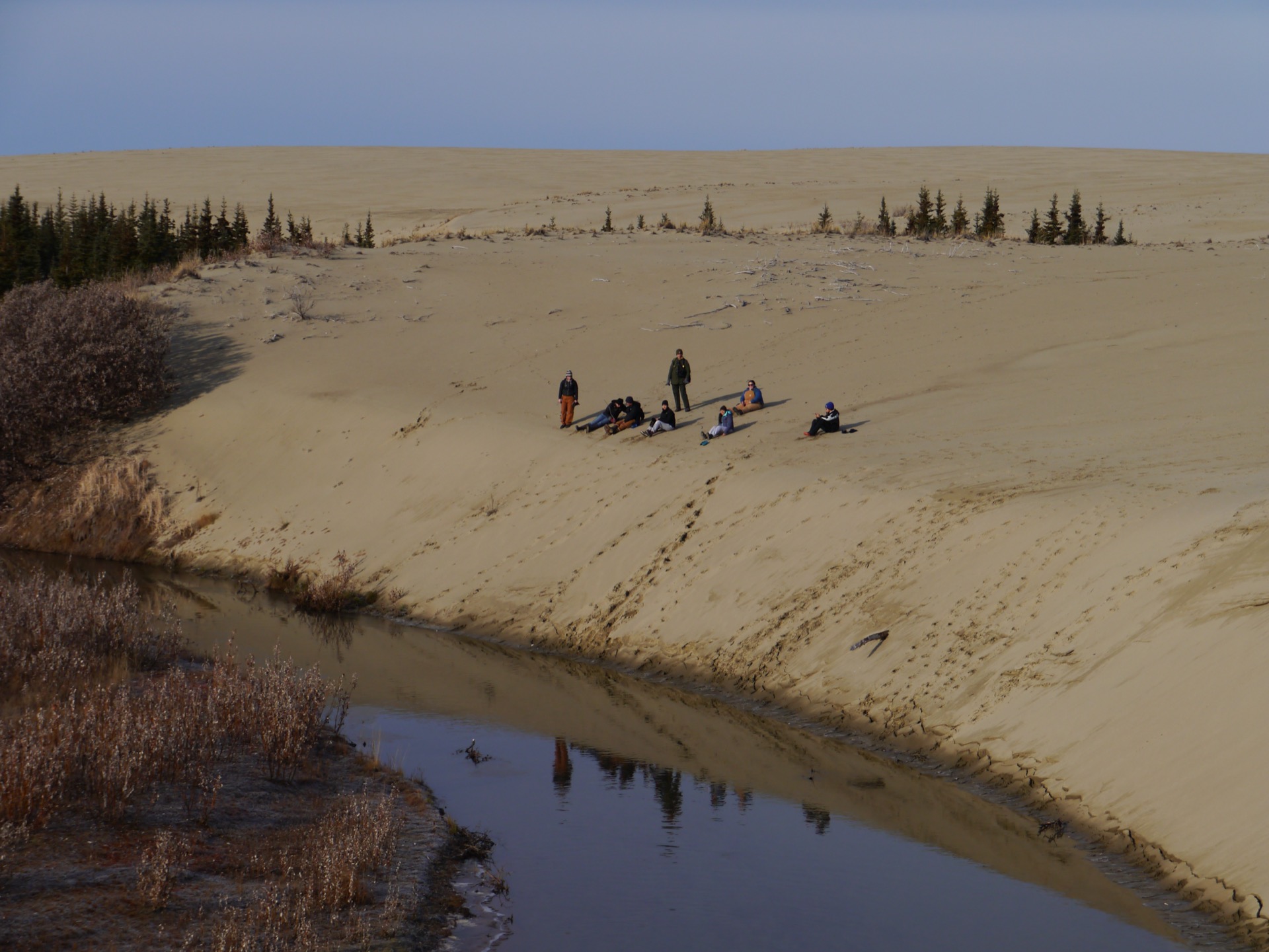
Great Kobuk Sand DunesLargest active Arctic dune field in N. America▾
Dune Facts4▾
Height
Dunes reach up to 100 feet tall
Size
Great Kobuk field covers 25 sq mi; ~30 sq mi combined with the smaller Little Kobuk and Hunt River dune fields
Formation
Glaciers ground bedrock into fine sand starting ~28,000 years ago, later wind-transported into the valley as ice retreated
Summer heat
Surface temperatures can reach up to 100°F despite the Arctic setting
Getting There2▾
Wheeled aircraft
Can land directly on the sand
Floatplane + hike
Land on the Kobuk River, then ~2-mile unmarked tundra hike (~4 hrs round trip)
Onion Portage & the Caribou Crossing12,500 years of history▾
Onion Portage Archeological DistrictNational Historic Landmark▾
Discovered
Excavated by archaeologist J. Louis Giddings starting in 1961
Cultural layers
Over 70 stratified layers identified
Time span
9 cultural complexes spanning at least 12,500 years of human occupation
Things to Do6 categories▾
River Floating3 details▾
Kobuk RiverSpring–summer
380-mile river with about 61 miles flowing through the park; expect possible rapids and trickier navigation near Ambler and Onion Portage
AccessCharter required
No road or river put-in exists inside the park; access is by air taxi from Bettles or Kotzebue, with all gear flown in
Recommended CraftSelf-sufficient
Collapsible canoes, kayaks, and small rafts are the practical choices for this trail-less wilderness route
Fishing2 species▾
SalmonSeasonal run
Present in the Kobuk River; spend their adult lives at sea before returning to freshwater to spawn
WhitefishSeasonal
Also found in the Kobuk River; unlike salmon, whitefish can spawn repeatedly over many years
Flightseeing2 ways▾
Charter Operators~$1,000+/hr
Air taxi companies based in Kotzebue and Bettles offer chartered flightseeing by the hour or day, with pilots able to land for on-foot exploring
Great Kobuk Sand DunesDay trips
NPS notes it as a popular flightseeing destination, though wildlife is hard to spot from the air since animals aren't concentrated in particular areas
Wildlife Viewing & Photography2 ways▾
Wildlife ObservationNot guaranteed
NPS describes "abundant opportunities for observing wildlife" across the park's undeveloped landscapes
PhotographyYear-round
Vast, roadless terrain and Arctic light give wide-open subject matter, from the dunes to the river valley
Winter Travel3 ways▾
SnowmachiningWinter
A way to cross the park's frozen rivers and tundra for visitors with the right equipment and skills
Cross-Country SkiingWinter
Frozen waterways and open tundra become ski routes; full self-sufficiency and cold-weather preparedness are required
Dog MushingWinter
A traditional means of winter travel across the park's frozen rivers
Bird WatchingTop 5 species▾

Golden Eagle
Hunts over the tundra and dunes

Gyrfalcon
World's largest falcon species

Willow Ptarmigan
Common on the Arctic tundra

Arctic Tern
Longest migration of any bird species

Sandhill Crane
Migrates through the valley
Camping & PermitsNo permit required▾
Park Contact Information